This article was originally emailed as our monthly Workplace Design & Management newsletter at 11:00 on 16/03/2017. You can view older newsletters here and register to receive them monthly.
DO YOU HAVE HOME WORKERS?
Of course you do!
 A few years ago (in a time before Agile Working was a hot topic), a Facilities Manager told me everyone in his company had a dedicated workplace, there was no hot desking and they had no home workers. I had only question: does anyone have a laptop? His affirmative reply meant that the organisation obviously had personnel working at home (although not necessarily authorised). Today, nobody would make such a bold statement in the first place. With laptop sales significantly exceeding desktop models and a proliferation of smartphones and tablets, not to mention Bring Your Own Devices practices (again, not necessarily authorised) and widespread Agile Working programmes, employees are being positively encouraged to work away from the office. The home is just one such workplace but, for the purposes of this newsletter, we are focussing on a few of the specific issues of employees working at their own residence.
HEALTH, WELLBEING, PRODUCTIVITY & DUTY OF CARE
Understanding individual needs and responses
 For those based in open plan offices, working at home can be an ideal way to address two of the ‘4Cs’ (contemplation and concentration, rather than collaboration, communication). However, many miss the interaction with colleagues and a key negative factor can be lack of direction and goals from their line manager. Many employers overlook the importance of the culture change and different (pull, rather than push) management style required. To ensure maximum buy-in from those working at home, managers need to be trained to understand the issues and the correct way to modify their behaviour and relationships with colleagues. It is also essential to provide instant access to central support for everything from internet and login issues to mental health and wellbeing.
ASSESSMENT AND EQUIPMENT
Getting it right
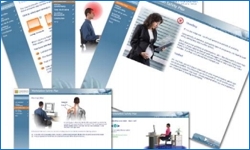 Many people lack sufficient space for an office at home and the potential issues are compounded by the almost inevitable ‘out of sight is out of mind’ circumstances. Home workers need to be properly assessed and this can be done online or with a site visit. Site visits address issues that are far less common in the office (light levels, overall space, fire extinguishers) and can incorporate other essential services such as PAT testing. Many employers create a brief catalogue (with suitable control mechanisms) for homeworkers to identify and order key equipment such as laptop stands or separate monitors. It is generally accepted that nothing will be handed back if an employee resigns so it is important for employers to get good advice to ensure resources are optimised. Items such as our Capsule Collection chairs are the best possible balance of budget and ergonomics.
MUKAVA
A multifunctional platform well suited to the home office
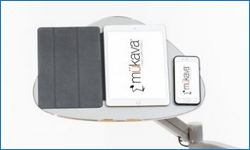 Appearance is an important factor when employees choose work products for use at home. What works in a minimalist warehouse loft is unlikely to work in a Tudor cottage! Mukava is at home in a multiple hot-desking environment but its clean lines, modern look and multifunctional nature make it a good candidate as a multi-purpose tool in a space-constrained home office. Combining laptop platform, document holder, white board, tablet and smartphone stand with built-in device charger, USB socket and magnetic grips, this small unit truly ‘does it all’! It can be mounted on any VESA monitor arm. Download the brochure for further details.
HANDHELD DEVICES
Averting problems from extended use
 Smartphones and tablets are used almost everywhere, not just in the home. Management of the technology, what the products are used for and how they are used presents many challenges to responsible employers and the pace of technology makes it hard for organisations to keep up, let alone get ahead. Personnel benefit from education to understand the issues and ensure they act responsibly. There are many adaptors and accessories to aid comfort when using handheld devices but the technology is all, fundamentally, badly designed for prolonged use! A key part of our handheld devices strategy is therefore to help users understand the postures to limit (or avoid).


 Posted by Guy Osmond
  The expression popularised by Mark Twain (and found elsewhere in publications dating back to the late nineteenth century) is as relevant today as it ever was. Since the start of the year, I have learned that ‘post-truth’ was the
  As we return to this event for the first time in a few years, we have been thinking about what services we can offer private practice physiotherapists, especially those who are unfamiliar with the Occupational Health demands of the workplace. We are therefore working on a series of workshops to provide a more contextual understanding of workplace musculo-skeletal issues and ways to support and improve the working conditions of those who suffer. If you are attending the
  At least once a week, I receive notification from yet another Chinese manufacturer that they have introduced a new sit-stand adaptor. This usually prompts me to play ‘spot the clone’ in marketing literature and web sites! Amongst this array of (quite similar) choices, we still believe the
  If you have not already seen it, you can read my full report from the Stockholm Furniture & Light Fair
  When we announced the 20th Anniversary of our
  Osmond Ergonomics