 As the debate about too much sitting rages on, there are many misunderstandings. ‘How much should I stand at work?’ is a question we are asked frequently but, like ‘What is the best office chair?’, it is one of those ‘not really the right question’ questions. Thanks to the reach and diversity of the ‘net, the volume of information on the topic – impartial research, marketing blurb pretending to be research, informed opinion, ill-informed opinion and downright nonsense – continues to grow and, for many, the newspaper headlines and conflicting messages are bewildering.
When people ask me about the ‘right’ amount of time to sit and stand, I jokingly ask them to give me a figure that suits their needs and I will find them some research to support that figure! As a non-academic, it seems to me that researchers always say that more research is needed (possibly because they are actively seeking funding to extend their research?) but they are not always good at looking objectively at existing research, especially if it may contradict theirs (possibly because they are actively seeking funding to extend their research?).
Sometimes, history is completely ignored. Reports as far back as the nineteenth century and significant research from the 1980s onwards identify musculo-skeletal symptoms associated with long periods of standing amongst retail workers and others. Yet, the Consensus Statement published by the British Journal of Sports Medicine (BJSM) in 2015 concludes that those whose jobs are predominantly desk-based should “progress towards accumulating 2 hours per day of standing and light activity (light walking) during working hours, eventually progressing to a total accumulation of 4 hours per day”.
I have already stated that I am not an academic and I must also make it clear that I have no medical training either but, as one who has spent over twenty years working in the field of workplace ergonomics, it seems to me that the research basis for the BJSM paper makes cardiovascular issues its focus and ignores or trivialises the musculo-skeletal considerations. I know many people who could not possibly stand for as much as four hours a day, yet a document with the Public Health England logo in its header advises them to do so.
No wonder there is so much confusion!
 Prompted by the disparity in advice and encouraged by recent conversations with professional colleagues and friends, I have been looking for research-based recommendations that we may be more confident about. As a result, I have been reading ‘Sitting Kills, Moving Heals’ by Dr Joan Vernikos, former NASA Director of Life Sciences.
At first glance, the cover has the look of one of those slightly dubious self-published, self-help books but the content is based on thirty years of NASA research and experience. It was published in 2011 (more work that was apparently ignored or overlooked in the BJSM conclusions) but is particularly topical at the moment since British astronaut Tim Peake has been carrying out cardiovascular research on the International Space Station.
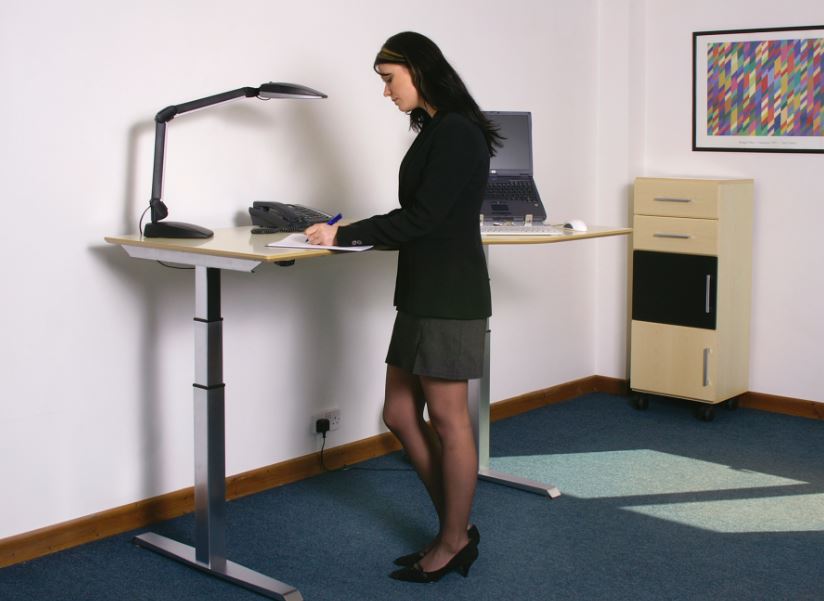
In simple terms, Dr Vernikos’ primary recommendation to reduce the cardiovascular risks of prolonged sitting is to stand up often. Her work concludes that the length of time standing is not relevant but the number of times you stand up is what matters. In other words, standing up ten times for two minutes is ten times more effective than standing up once for twenty minutes. The answer to the question ‘How much should I stand at work?’ is therefore little and often. A couple of minutes a few times an hour should suffice. Remember, though, that this must be throughout your waking hours, not just at work. Obviously, other elements of a healthy lifestyle will also help and we continue to recommend all our other sit-stand tips.
Of course, the 150-page book contains much more than one simple recommendation and the history, background, medical and scientific explanation makes an easy, enjoyable read. It is likely I shall blog further about this in due course.
In the meantime, I look forward to being challenged about this article! What do you think?


 Posted by Guy Osmond
  For other organisations, the picture is much more diverse.
 End of the Aisle and Fixed Percentage programmes nearly always use
  Finally, and contrary to much of the publicity around this topic, this whole issue is not about standing more but about sitting less. To be fully effective, therefore, sit-stand should be part of a broader wellbeing initiative that encourages more movement.
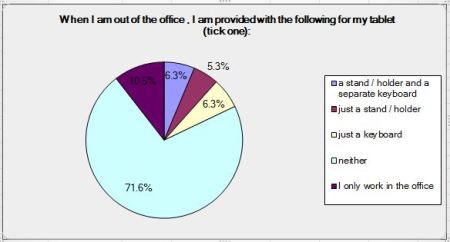
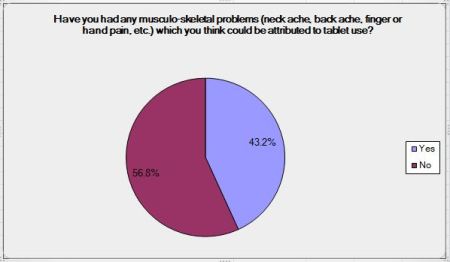
 We have now collated the data from our comprehensive survey completed last year. In my view, the most significant result is that only one fifth (20.5%) of respondents use a tablet supplied by their employer but 81.2% do at least some work on a tablet. This means that employers can no longer assume that ‘we have no tablet users’ just because they do not issue them. Combine this with the fact that 43.2% reported musculo-skeletal problems that they attributed to tablet use and there is obvious cause for concern. See the full report
 We shall be back at the NEC in Birmingham on March 8 – 9 and our stand is just inside the exhibition entrance on the left – the same location as last year. What we display will be dependent on new product developments that are still being finalised but, as always, we shall have an interesting array with plenty for you to see, discuss and think about. Find out more about the exhibition and/or register for the conference
  After more than 70 editions of this eBulletin, we think it is time to introduce a sister newsletter alongside it. Our new Workplace Design & Management email will be sent out in the third week of each month. It will cover more strategic issues relating to facilities design and people management. This will enable to us to explore the interaction between physical and human factors issues that need to be considered in the design and implementation of the modern workplace. You will not receive it automatically, so please
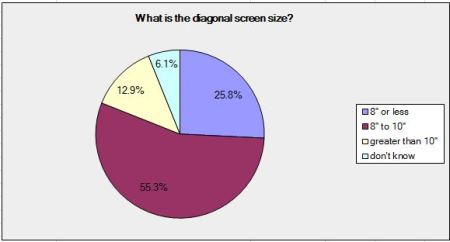
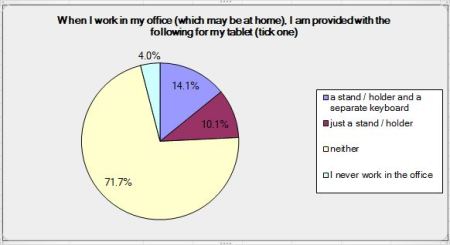
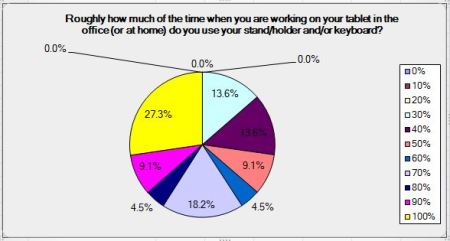
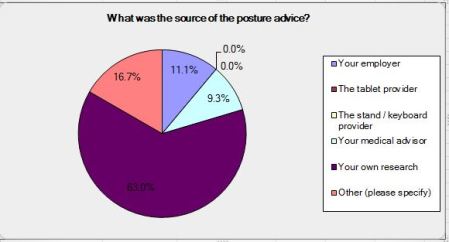
  The results of our recent survey of tablet computer users are shown below.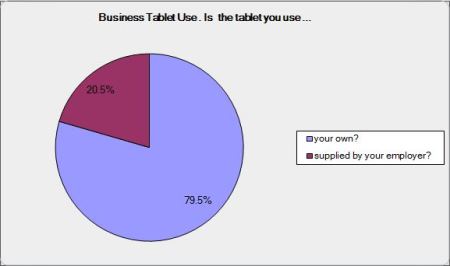


















 Osmond Ergonomics